
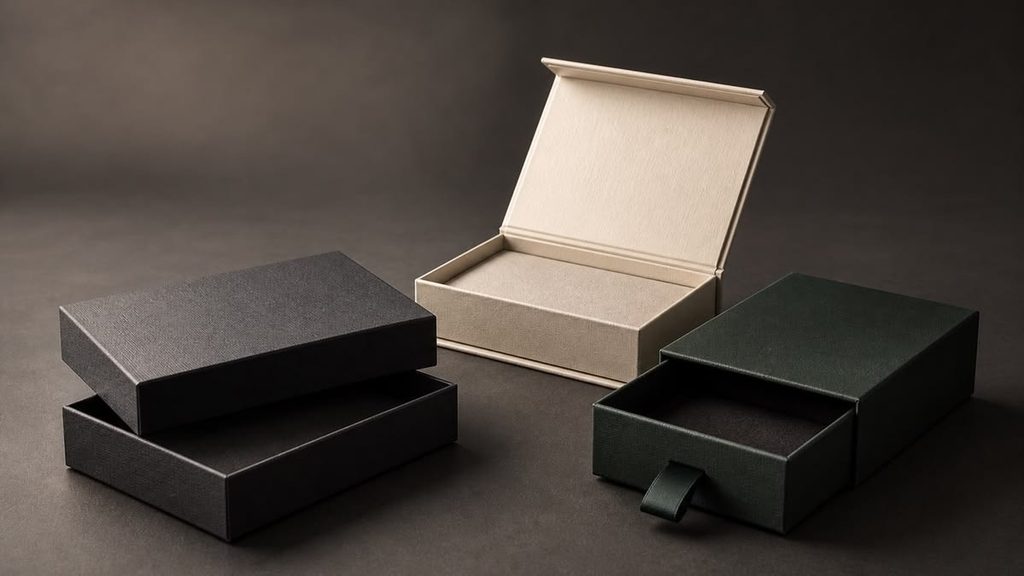
A wallet may be a small item, but it packs a punch. It must appear high-end on the shelf, travel intact in a delivery truck and feel like a gift to the customer when opened. Most of that is done by the box, which is also what the shopper first encounters.
A winning wallet box can increase perceived value, reduce damage claims, and drive repeat purchases for US retailers and online brands. This article highlights the most common types of boxes, what to consider, and how to choose packaging for your sales channels.
Why Wallet Packaging Deserves More Attention
The market for wallets is a busy one. Leather, vegan leather, RFID-blocking, slim cardholders, and bifolds are all vying for the same customers, and on initial inspection, they can be difficult to distinguish from one another. Packaging is one of the only opportunities to catch the eye.
Good packaging also solves practical problems:
- Defends the goods. The scuffs, scratches, and creases of leather and the damage of metal snaps or logos.
- Maintains its shape. Even a new wallet that is already bent or misshapen looks used.
- Gift-friendly wallets are among the most popular gifts for birthdays, graduations, Father’s Day, and holiday gift-giving. A giftable box takes one thing away from the buyer.
- Brand recall. The uniform design of your box makes your product quickly recognisable in footage or unboxing videos.
Common Wallet Box Styles
Each style suits a different sales channel and budget. Here are the options most brands choose from.
Rigid Setup Boxes
These boxes are robust and solid, covered in paper or cloth, generally with a removable lid or hinged top. They’re plush, hold their form for many years, and are a good fit for high-end leather wallets, gift packs, and brands that want a gift box. They’re more costly and need more room to store and ship, so they work for higher price points.
Magnetic Closure Boxes
A box with a magnet tucked in so it «clicks» the lid shut. The mechanism is silky smooth and adds a pause to the opening. They’re a popular choice for gifting ready wallets and holiday collections.
Folding Cartons
Folding cartons are constructed of paperboard and shipped flat, making them cost-effective and space-efficient to stock. Great for retail displays, they provide ample space for branding, window openings, and product information. A flexible and cost-effective option for mid-range wallets and high-volume orders.
Drawer and Sleeve Boxes
The inner tray slides from an outer sleeve, which can be designed like a matchbox. It’s nice to reveal, and the sleeve offers ample printing area. Great option for slim wallets and cardholders.
Window Boxes
A clear window allows shoppers to peek inside the box to see the item. In the store, the display helps shoppers assess the colour and texture of the wallet. The window should be positioned so that the wallet remains protected and does not accumulate dust or fade under the lights.
Kraft and Eco Boxes
Natural kraft and recycled materials attract sustainability-conscious buyers. They complement minimal, natural packaging, and price out pretty well. American shoppers seem to respond positively to easy-to-understand box recycling directions printed on the box.
Box Styles at a Glance
| Box Style | Look and Feel | Best For | Shipping Weight | Typical Cost |
| Rigid setup box | Premium, keepsake quality | Luxury leather wallets, gift sets | Heavier | High |
| Magnetic closure box | Polished, gift-ready | Holiday and gifting collections | Heavier | High |
| Folding carton | Clean, versatile | Retail shelves, high volume | Light | Low to medium |
| Drawer/sleeve box | Modern, reveal moment | Slim wallets, cardholders | Medium | Medium |
| Window box | Open, product-forward | In-store display | Light to medium | Medium |
| Kraft/eco box | Natural, minimal | Sustainable brands | Light | Low |
What Retail Stores Need From a Wallet Box
Brick-and-mortar shops care about how a box behaves on a fixture, not only how it looks.
Shelf impact. Your box competes with dozens of others at eye level. Bold, clear branding on the front panel helps shoppers recognise you quickly.
Stackability and fit. Boxes should stack evenly in display cases and on shelves without crushing the one below.
Hang tabs and peg options. Some stores display wallets on pegs or in tiered displays, so check that your design works with those fixtures.
Information on the box. Material, size, features such as RFID protection, and a barcode should all be easy to find. Retail buyers appreciate packaging that is ready to scan and sell.
Durability under handling. Boxes get picked up, put back, and picked up again. Sturdy corners and clean finishes keep products looking new after repeated handling.
What E-Commerce Brands Need From a Wallet Box
Online sellers face a different challenge: the box must protect the product in transit while still making a strong impression when it arrives.
Shipping protection. A wallet box inside a mailer should not shift or crush. Add a snug insert or tissue wrap, and choose a right-sized outer shipper to avoid wasted space.
Dimensional weight. Carriers such as UPS and FedEx price by size as well as weight. Slim, flat boxes can lower shipping costs, especially for high-volume stores.
Unboxing experience. Shoppers post unboxing clips on TikTok and Instagram, so a thoughtful reveal can bring in free visibility. A branded insert card, a ribbon, or a printed interior adds little cost and makes the moment feel special.
Returns. A sturdy, reusable box for returns keeps products in better condition and reduces the odds of a damaged refund.
Buying in Bulk: What to Check
Many retailers and online brands buy packaging in larger quantities to lower the per-unit price. If you are sourcing a gift box for wallet wholesale, it helps to compare suppliers on more than just price. Before placing an order, ask about:
- Minimum order quantities. Smaller brands may need lower MOQs to avoid tying up cash.
- Material options. Compare paperboard thickness, finishes, and recycled content.
- Custom sizing. A box made to your wallet’s exact dimensions protects better than a stock size.
- Sample availability. Always request a sample and test it with your actual product.
- Lead times. Production plus shipping can take weeks, so plan ahead of busy seasons like back-to-school and the holidays.
- Print quality. Check colour accuracy, logo sharpness, and finish options such as matte, gloss, foil stamping, or embossing.
- Compliance and labeling. Make sure any recycling or material claims are accurate and supported.
Design Tips That Raise Perceived Value
Small details can change how a wallet is valued before it leaves the box.
- Keep the design simple. A clean logo and a limited colour palette often look more premium than busy graphics.
- Add a finishing touch. Foil stamping, embossing, or a soft-touch coating gives a tactile feel.
- Use the inside. Printing the interior or adding a branded tissue wrap makes opening the box part of the story.
- Match the product. A rugged leather wallet suits natural textures, while a modern minimalist cardholder fits sleek, monochrome packaging.
- Include care information. A short card on how to condition leather or clean the wallet shows you care about the product and the customer.
Seasonal Planning for the US Market
Wallet sales spike around Father’s Day, graduation season, Black Friday, and the winter holidays. Order boxes early so you are not caught by supplier backlogs or shipping delays. Limited-edition sleeves or holiday-themed inserts can refresh your existing box without a full redesign, and they give customers a reason to buy now.
Final Thoughts
The best wallet box balances three things: protection, presentation, and price. Retail stores should focus on shelf appeal and sturdy handling. E-commerce brands should focus on shipping efficiency and a memorable unboxing. Both benefit from boxes sized to the product, tested with samples, and designed to reflect the brand’s style.
Start by listing your sales channels, product range, and budget, then request a few samples and compare. A well-chosen box does more than hold a wallet. It helps the sale happen and brings the customer back.